On this page you can see some visual depictions of seat distribution in the Parliament of Montenegro for all national elections from 1990 up to date.
You will see that the shape of the Parliament after 1990 and 1992 general elections was rectangular while after 1996 elections it was shaped as hemi-cycle which remains up to date.
Below each graph you can find notes on government parties.
Note: graphs made partly with the aid of the free tool called Parliament Diagrams. Fonts, legend, and color scheme decided by me. Data is taken from MNEE Dataset 1.
1990 elections (first multi-party, but not free and fair)
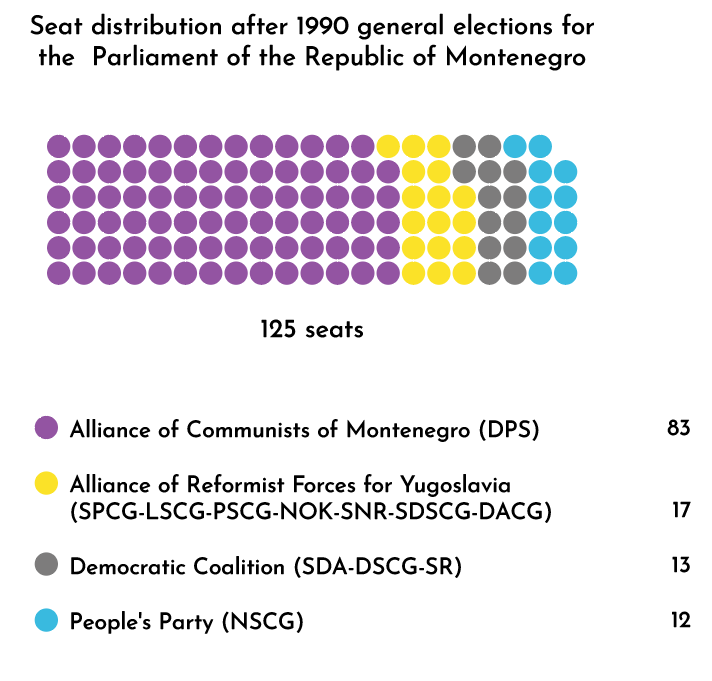
Government party after 1990 elections: Alliance of Communists of Montenegro
Note: Alliance of Communists of Montenegro will rename itself to Democratic Party of Socialists before the 1992 elections
1992 early elections
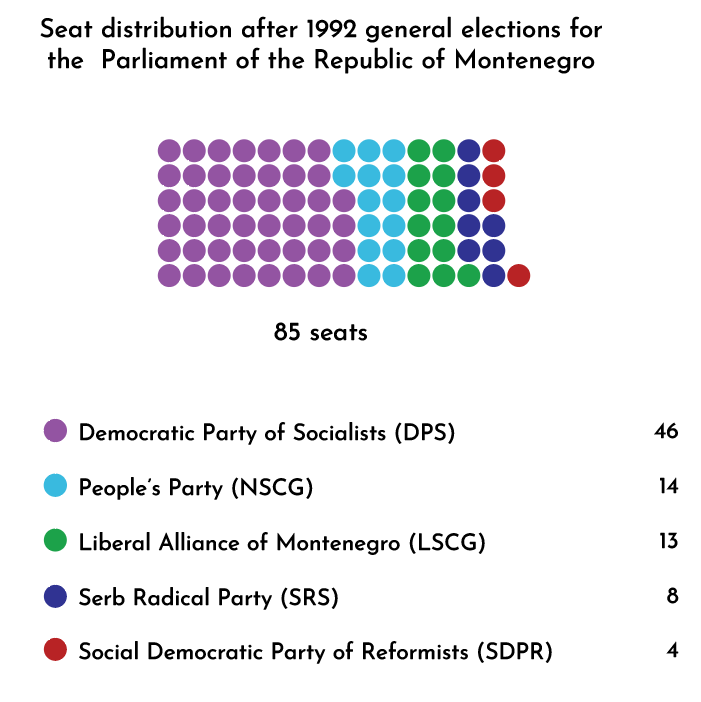
Government party after the 1992 elections: Democratic Party of Socialists (DPS)
1996 general elections (gerry-mandering takes place)
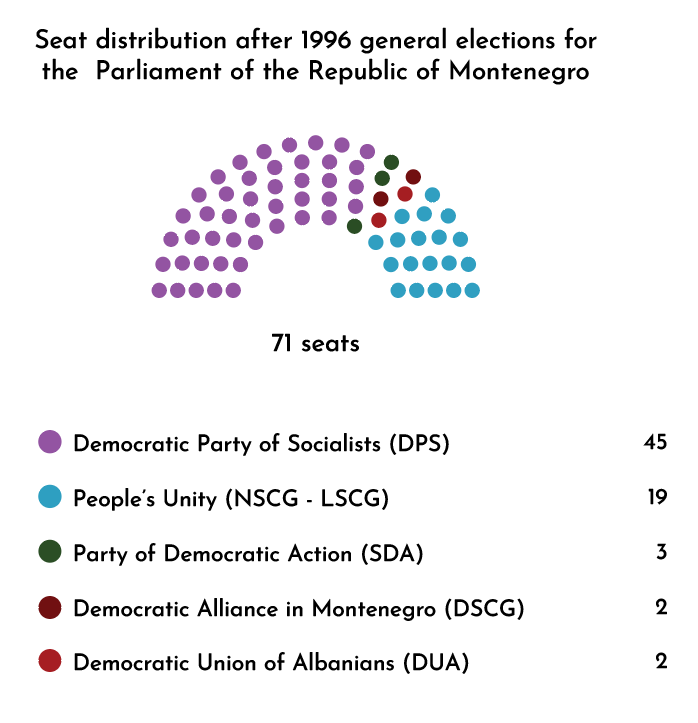
Government party after the 1996 elections: DPS
1998 early elections (crisis of one-party dominance and party split)
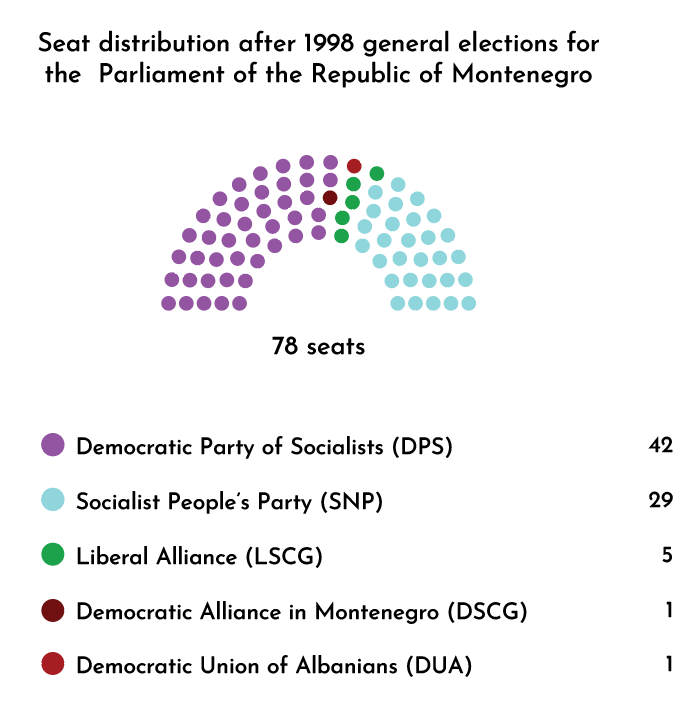
Government parties after 1998 elections: DPS – SDP – NSCG (Coalition For a Better Life)
Note: this is the first time that DPS has had to rule in coalition with other parties
2001 snap elections
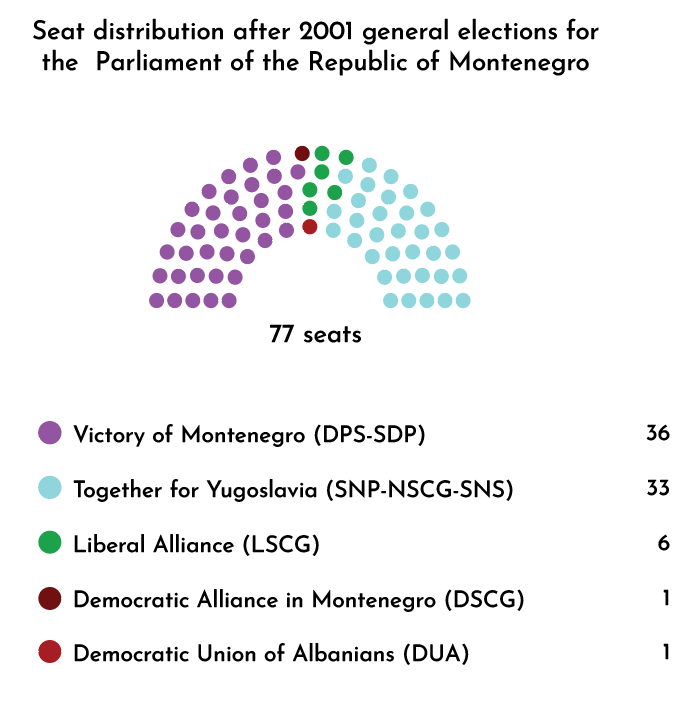
Government parties after 2001 elections: DPS – SDP (It is the victory of Montenegro coalition) plus minority support from LSCG
Note: minority support from LSCG was based on the key requirement that the independence referendum be held as soon as possible, which the DPS-led government did not fulfill, and this led to early elections.
2002 snap elections
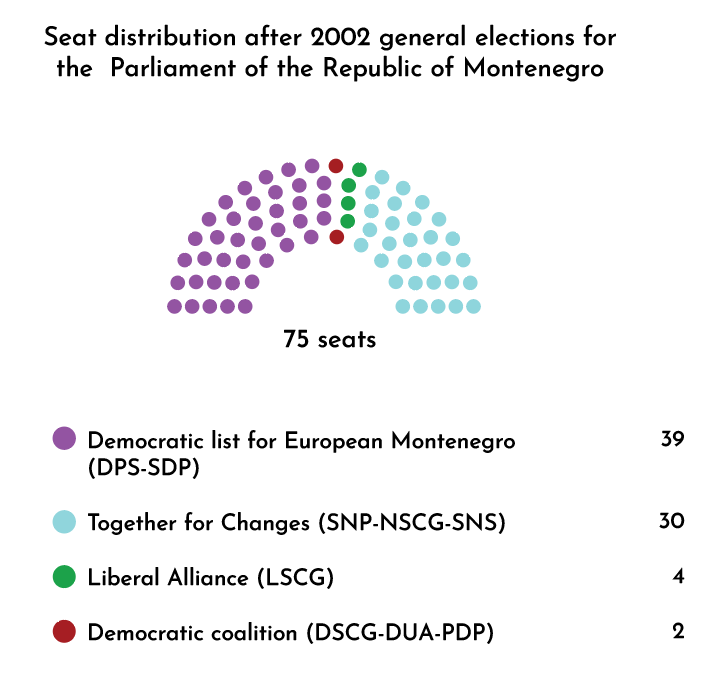
Government parties after 2002 elections: DPS – SDP -LDPCG – NSLCG (Democratic List for European Montenegro)
2006 elections (first after independence)
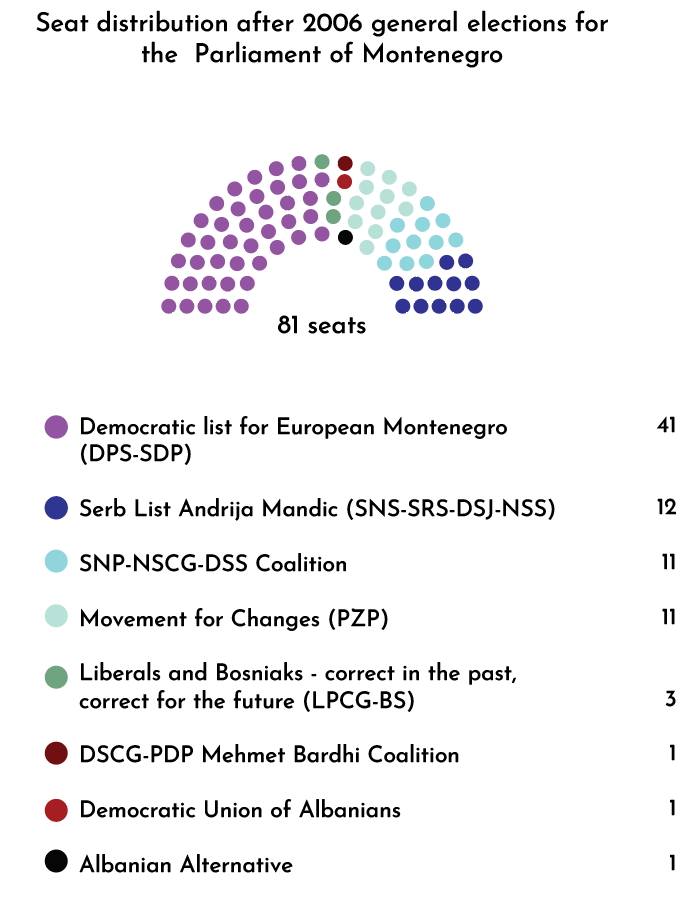
Government parties after 2006 elections: DPS – SDP (Coalition for European Montenegro) and DUA
Note: these are the first post-referendum elections.
2009 early elections
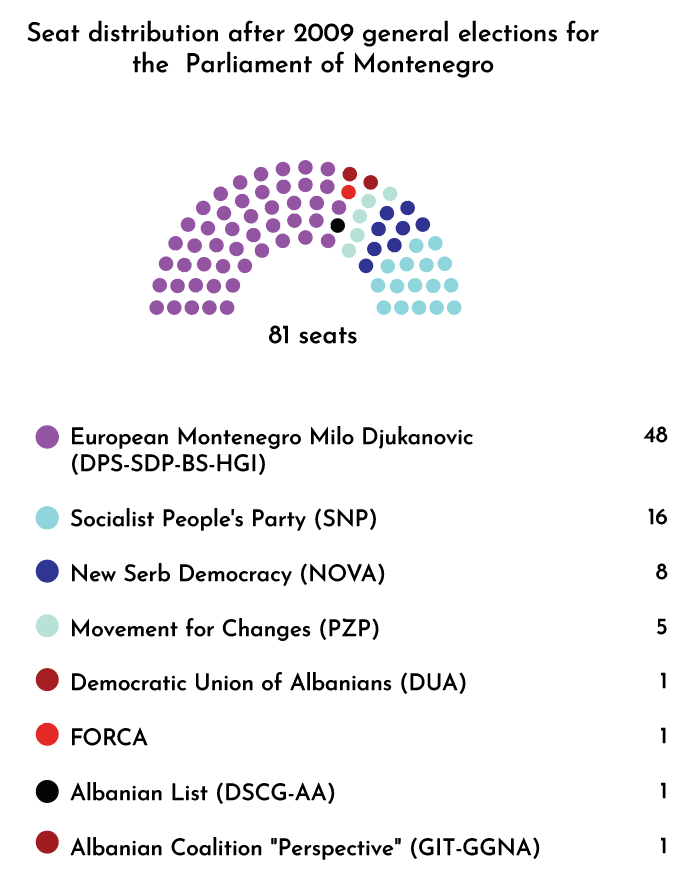
Government parties after 2009 elections: DPS – SDP – BS (from coalition European Montenegro), DUA (Albanian minority party)
2012 early elections
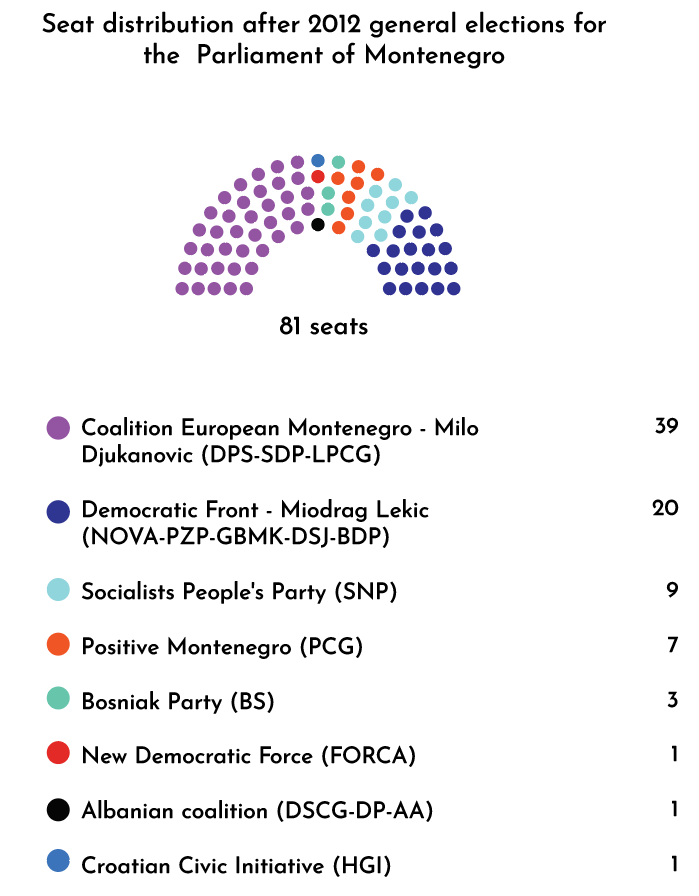
Government parties after 2012 elections: DPS – SDP (EU MNE coalition), HGI (Croat minority party), BS (Bosniak minority party)
2016 regular elections
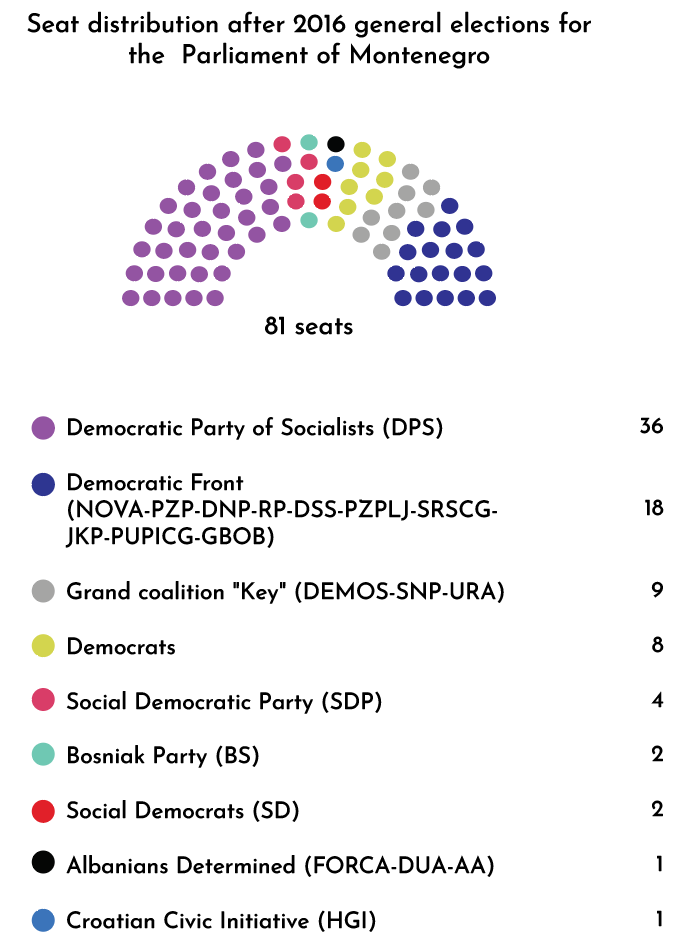
Government parties after 2016 elections: DPS, SD, HGI, BS
2020 regular elections (defeat of the dominant party)
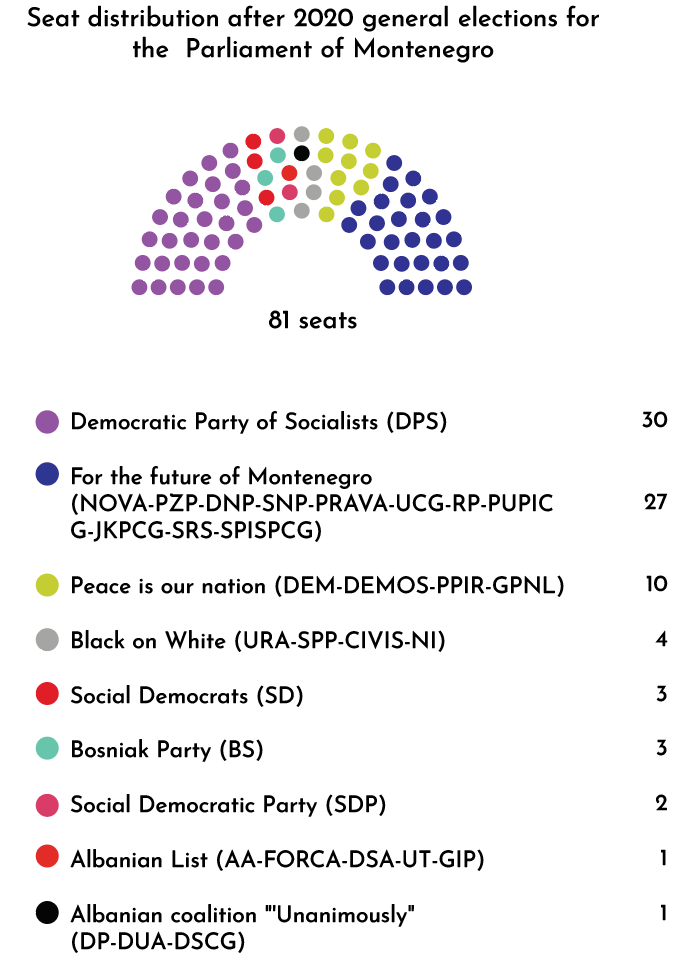
Government parties after 2020 elections: NOVA-PZP-DNP-SNP-PRAVA-UCG-RP (For the Future of Montenegro), DEM-DEMOS (Peace is Our Nation), URA-SPP-CIVIS-NI (Black on White)
Note: you can find full names and translation on page Additional useful information
2023 early elections (political crisis due to inefficient governments that succeeded DPS)
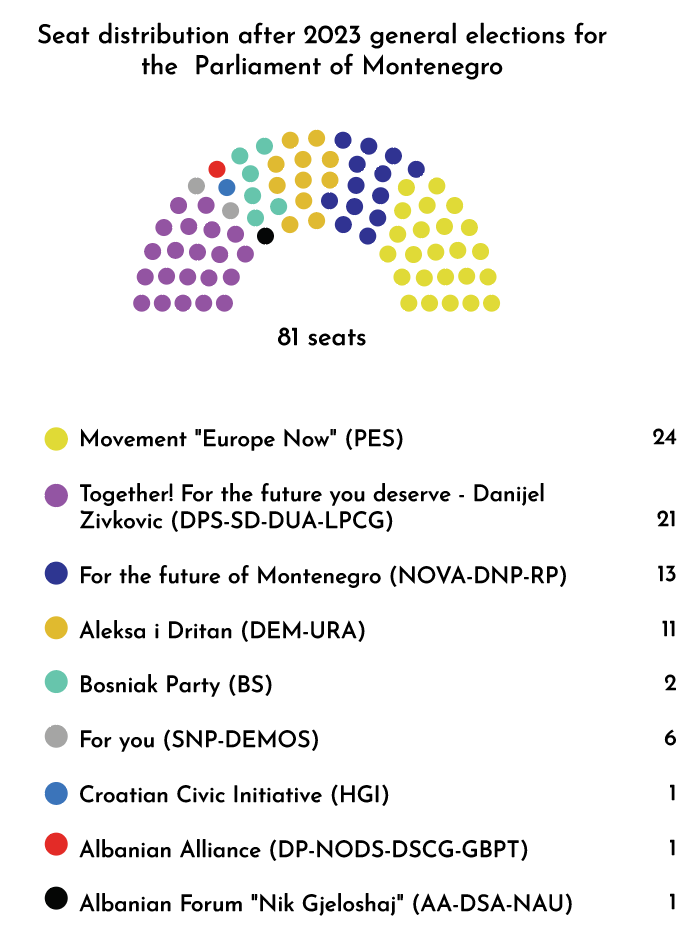
Government parties: PES, NOVA, DEM, SNP, Bosniak Party, Albanian Alliance, Albanian Forum
Note: some parties that originally participated together with post-2023 government parties refused to take part in the government. An example is that of URA (member of Aleksa and Dritan coalition).
Another interesting note to take is that at the beginning of 2026 the allies in the pro-Serb bloc could not resolve disagreements regarding the functioning of the Government and how the interests of Serbs in Montenegro are represented, which eventually resulted in the Democratic People’s Party (DNP) choosing to go to the opposition. However, the DNP did not want to vote against NOVA when a motion of no confidence in the Speaker of the Parliament (held by Andrija Mandic from NOVA) was submitted by the rest of the opposition.